Is Copenhagen safe at night?
What the rankings do and do not say
The Safe Cities Index is a composite: it weighs digital, health, infrastructure and personal security together, so first place in 2021 is a statement about a city that works rather than a statement that nothing happens in it. The Global Peace Index is a national measure, and Denmark’s eighth place in 2025 — down one from the year before — is about the country, not about a street. The murder rate of 0.8 per 100,000 in 2018 is the single number closest to what people actually mean when they ask this question, and it is low.
What none of them tell you is how a particular square feels at eleven at night, which is the thing visitors are really asking about. The honest answer is that central Copenhagen after dark is busy, lit and full of people going home on bicycles, and that ordinary urban caution applies here as it does anywhere.
The walk itself
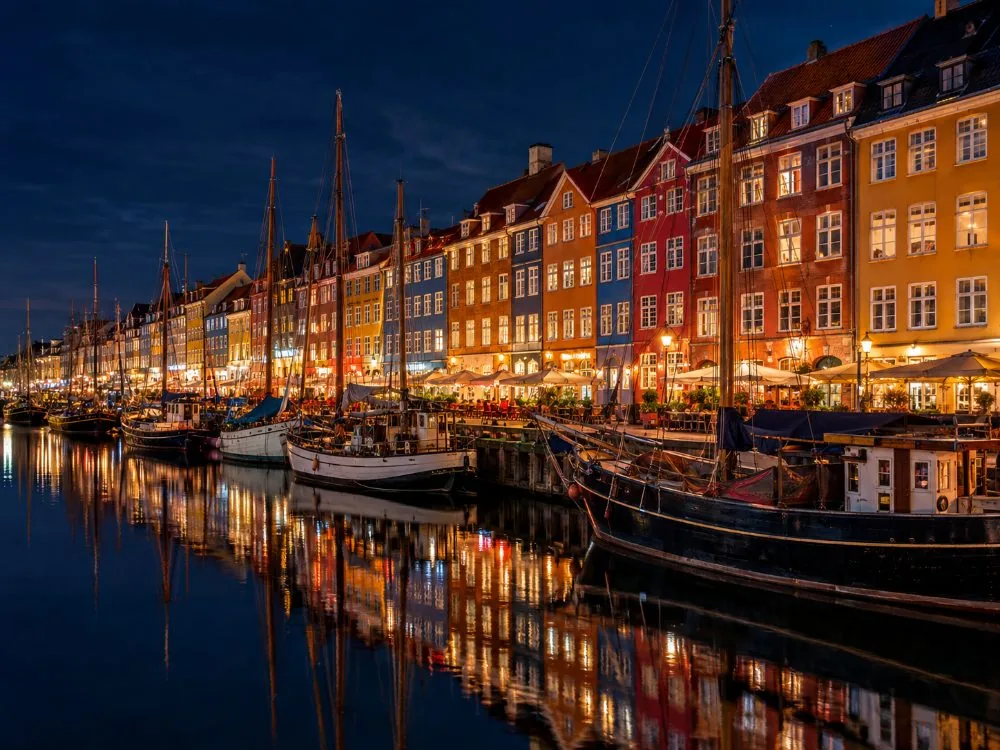
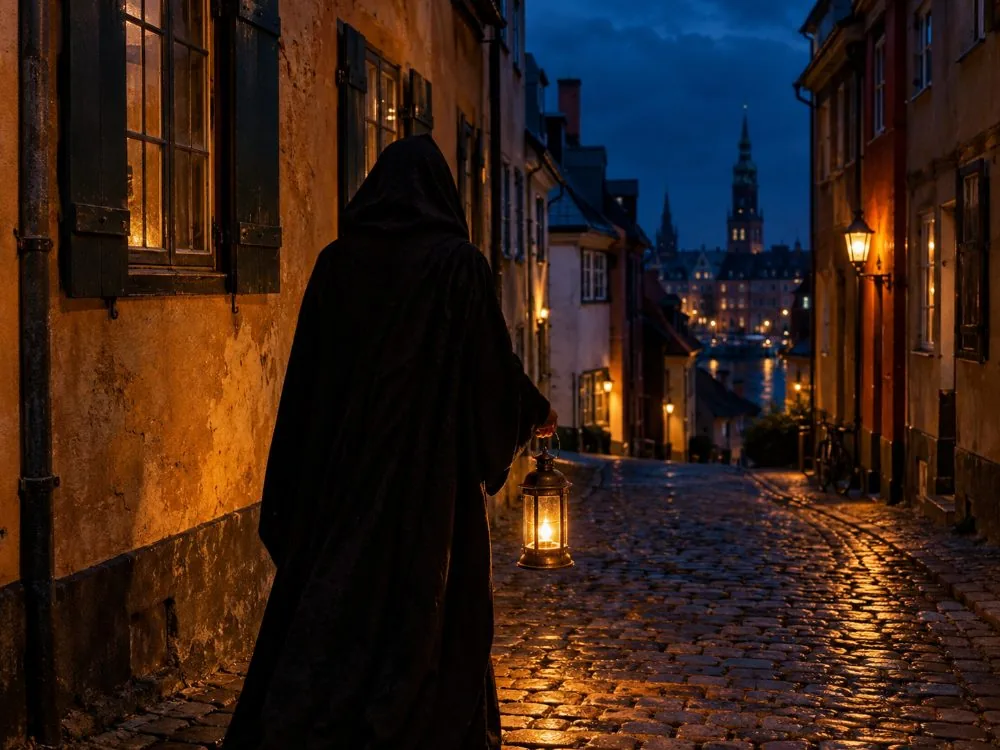
The guided ghost walk starts on Nytorv, which sits on Strøget in the middle of the old city, and finishes an hour and a half later at Kongens Nytorv at the top of Nyhavn — one of the busiest spots in the city at that hour, with a metro station and a row of restaurants. You are in a group with a guide throughout and you are released somewhere well lit and well populated. As evening activities in a European capital go, that is at the reassuring end.
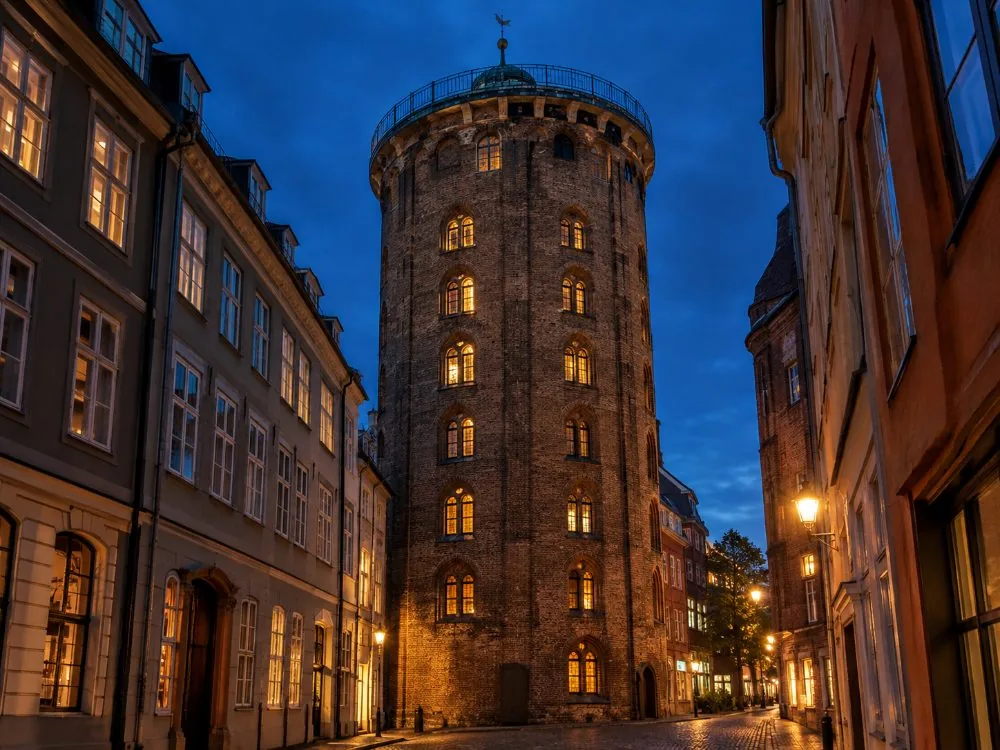
The self-guided hunts are different in one respect: nobody is with you. Their routes are central — Rundetårn to Gammeltorv, or the pier through Skt Annæ Plads to Nyhavn — and in the second half of October you can do either in daylight if you start early, since sunset is before five. See the sunset table.
What works
- First in the Economist Intelligence Unit’s Safe Cities Index, 2021
- Denmark eighth in the Global Peace Index in 2025
- A murder rate of 0.8 per 100,000 in 2018
- The walk ends at Kongens Nytorv, busy and lit
- The centre is compact, flat and full of people until late
Worth knowing
- A ranking is not a guarantee about any individual evening
- Denmark slipped one place in the 2025 Global Peace Index
- Cycle lanes at night are the most common visitor hazard
- Ordinary city precautions still apply, as anywhere
The thing most likely to hurt you in Copenhagen at night is a bicycle. The cycle lanes run between the pavement and the road, the traffic in them is fast and almost silent, and cyclists have right of way in them. Look both ways before stepping off a kerb, particularly when leaving a group that has just stopped on a corner.
Areas, and the red-light question
Copenhagen has no red-light district in the Amsterdam or Hamburg sense. What it has is a historical concentration of sex work behind the Central Station in Vesterbro — Istedgade, Halmtorvet, Skelbækgade — which has never been an officially designated zone. Prostitution itself was decriminalised in Denmark on 1 July 1999, while brothel-keeping, procuring and pimping remain illegal. That whole question is dealt with on the red-light page, and the broader one about districts is on areas to avoid.
Walking home afterwards
The walk ends at Kongens Nytorv, which is on the metro and a few minutes from most of the central hotels on foot. In October it will have been dark since half past four, so the novelty of walking home in the dark wears off quickly and becomes what it is: an ordinary walk through a lit city. Getting around Copenhagen has the practical detail, and whether Copenhagen is walkable covers the cobbles.
Why this matters to a ghost tour site
Because the contrast is the whole point of the subject. The safest capital in Europe by the 2021 index is also the city that buried about 20,000 people in the plague year of 1711 out of a population of 66,000, burned down in 1728 and again in 1795, was shelled by the Royal Navy in 1807, and lost 4,737 people to cholera in 1853. The walk is safe. The history is not.
 Lantern and black cloak
Copenhagen: Guided Ghost Walk through Haunted City
 A killing in 1899
Copenhagen: Murder Mystery Hunt by The Round Tower
 Nineteenth-century murder
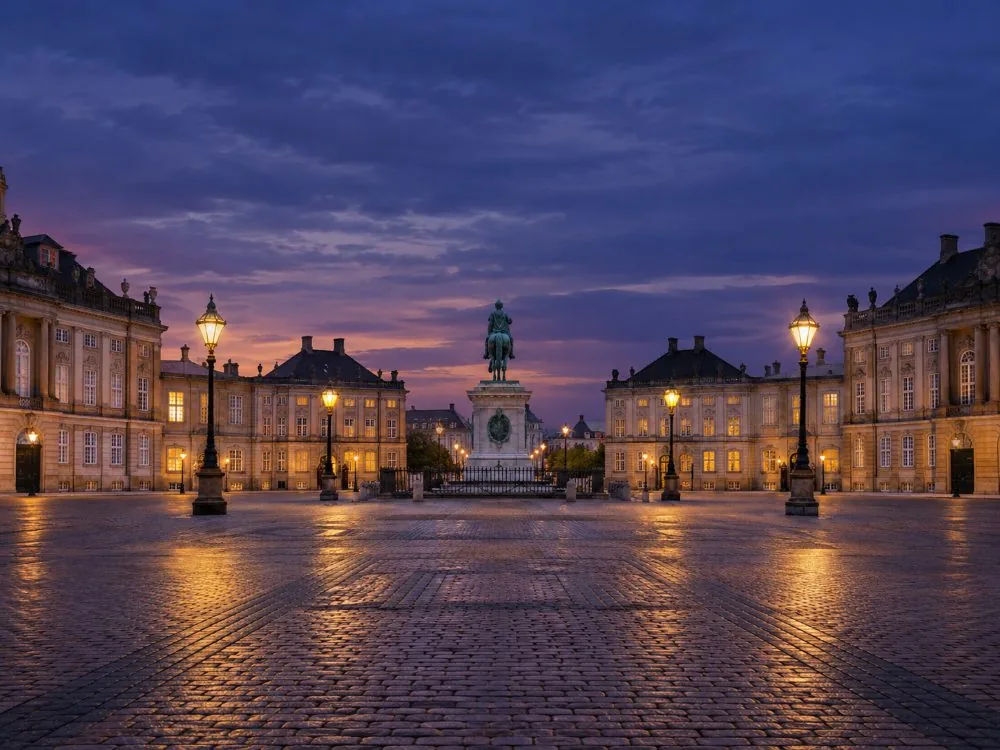
Copenhagen: Murder Mystery Hunt by Amalienborg Palace
Frequently asked questions
Is Copenhagen safe for tourists?
By the available measures, yes: first in the Economist Intelligence Unit’s Safe Cities Index in 2021, eighth for Denmark in the Global Peace Index in 2025, and a murder rate of 0.8 per 100,000 in 2018.
Is it safe to walk around Copenhagen at night?
The centre is compact, lit and busy, and the guided walk finishes at Kongens Nytorv, which has a metro station and restaurants. Ordinary city caution still applies: areas to avoid.
Does Copenhagen have a red-light district?
Not in the Amsterdam or Hamburg sense. There is a historical concentration behind the Central Station in Vesterbro, which is not an official zone: the red-light page.
What is the biggest hazard for a visitor at night?
Bicycles. The cycle lanes sit between the pavement and the road, the traffic is fast and quiet, and cyclists have right of way: is Copenhagen walkable.
Is the ghost walk itself safe?
It is a guided group walk through the middle of the old city that ends in one of its busiest squares: what to expect.