What to wear on a night walk

Dress for standing, not for walking
The route covers roughly a kilometre in ninety minutes, which tells you most of what you need to know: you are standing still for a good deal of it, in front of a court house or at the mouth of a street, listening. Clothing that is comfortable on a brisk walk through the city will be cold after fifteen minutes of that. Add a layer beyond what the walk from your hotel seems to need.
The wind matters more than the temperature number suggests. Copenhagen is a coastal city and the open squares — Nytorv, Gammeltorv, Kongens Nytorv at the end — have nothing to break it. A windproof outer layer does more for you here than a thicker jumper.
Shoes are the one thing not to compromise on
The old city is cobbled and the walk stays on it: squares, narrow streets, the stretch through and around Strøget, which was pedestrianised in 1962 at 1.1 km and is the spine of the area. Cobbles in the dark, wet, are unforgiving. Flat shoes with a proper sole, and nothing with a heel that can find a gap between stones.
By season
October, the month this site recommends, is mild and dark: sunset from 6:47 pm on the first to 4:35 pm on the thirty-first. A jumper, a waterproof jacket and a hat will cover almost any evening in it. Take gloves in the last week.
November to February is the serious end. January averages 1.4 °C and cold waves can reach fifteen or sixteen below, with about 1.5 hours of sunshine a day. Proper coat, hat, gloves, and thick socks, because standing on cold stone takes heat out of you from below.
March to May is changeable and the evenings are getting long. March, April and May are on the drier side of the year, but the wind off the water is still cold after dark.
June to August is warm, about 18 °C in July, and it does not get dark, which means a summer evening walk is the one occasion here you can dress normally. August is the wettest month of the year at about 80 mm, so take the jacket anyway. Why summer is not dark.
Included
- A windproof and waterproof outer layer
- Flat shoes with grip, for wet cobbles
- A hat, and gloves from mid-October onwards
- A small bag you can keep on you while standing
- Something to eat beforehand — nothing is included
Not included
- An umbrella, which is awkward in a group and useless in wind
- Heels, or any sole that can catch between stones
- A large rucksack you will be holding for ninety minutes
- Anything you would mind getting rained on
- A change of plan for rain; the walk runs anyway
Take a hood rather than an umbrella. You are in a group that stops, turns and moves off every few minutes, and an umbrella in the middle of that is a nuisance to everyone including you. A hood you can put up while the guide is talking costs nobody anything.
If you are doing a self-guided hunt instead
Same shoes, same jacket, one addition: something to lean on or write against, because you are filling in a case by hand. The hunts are analogue by design — paper and a pen, no phone — which is charming until it rains on the paper. Pick a dry evening if you can, since you choose the hour and nobody is waiting for you. See guided against self-guided.
And for the giants walk
That is four hours, in daylight, out of the city, with private transport, a coffee break and a meal included. Walking shoes rather than city shoes, and a layer you can take off indoors. It is the one walk on this site where you might be warm: the six forgotten giants.
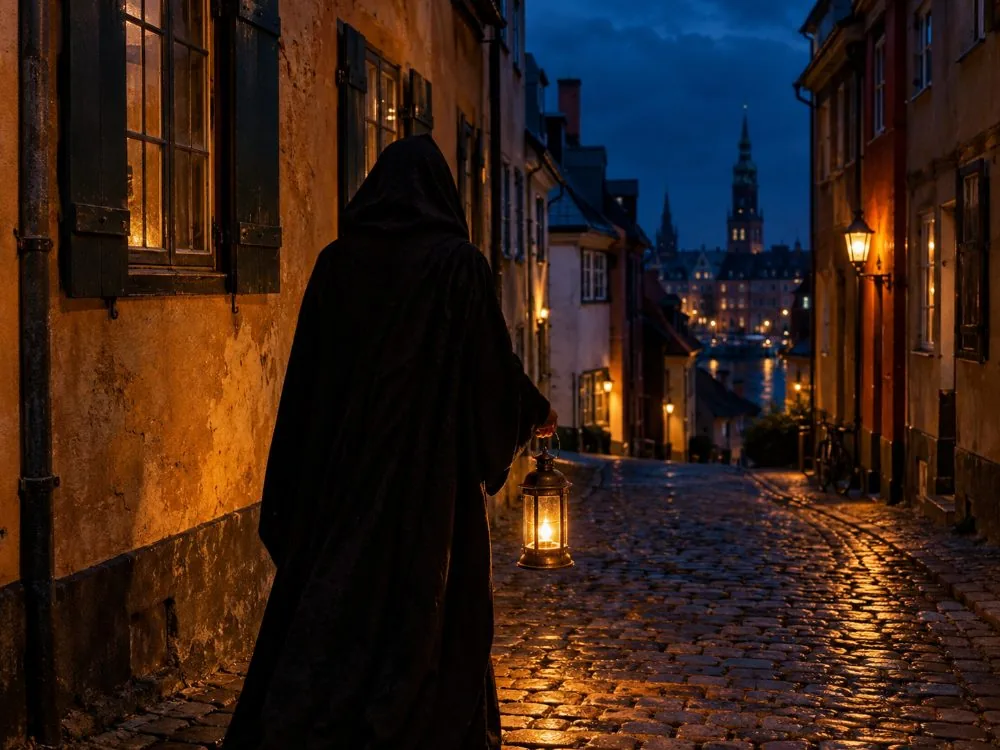 Lantern and black cloak
Copenhagen: Guided Ghost Walk through Haunted City
 Six trolls in the woods
Copenhagen: The Six Forgotten Giants Hunt and Nature Walk
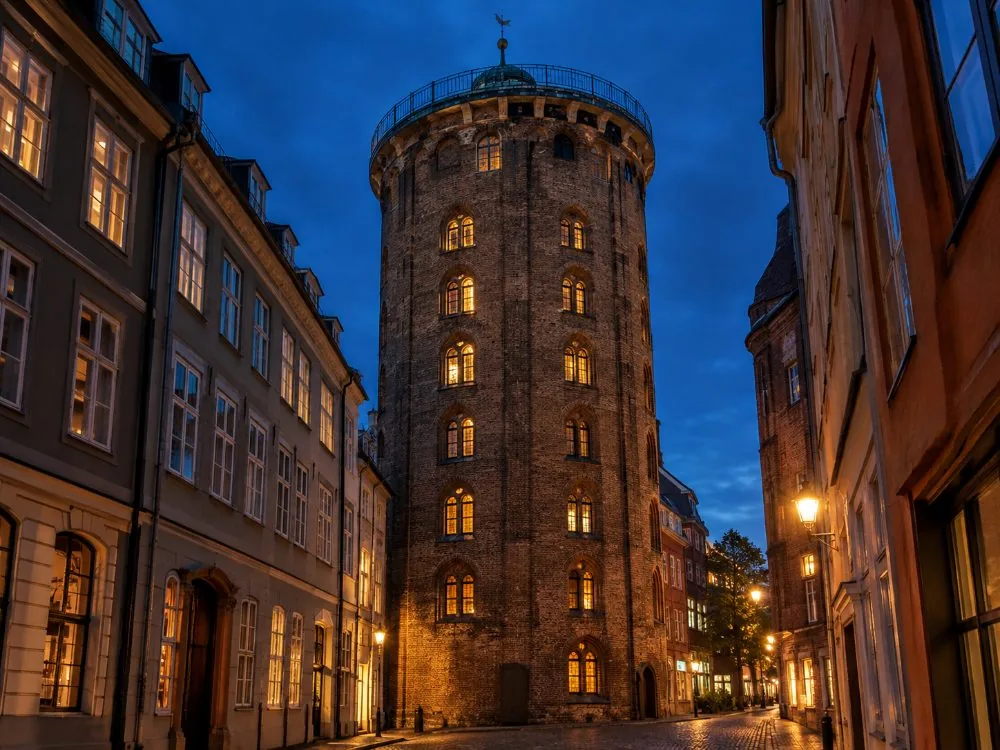 A killing in 1899
Copenhagen: Murder Mystery Hunt by The Round Tower
Frequently asked questions
Does the Copenhagen ghost walk run in the rain?
Yes. It runs in rain and in cold rather than being cancelled, and you can cancel free up to a day before if the forecast changes your mind: what to expect.
What shoes should I wear?
Flat shoes with grip. The route is cobbled, including the streets around Strøget, and wet cobbles in the dark are the main hazard of the evening: is Copenhagen walkable.
How cold is a Copenhagen evening in October?
Mild compared with what follows: January averages 1.4 °C and cold waves reach fifteen below. October is the month to stand outdoors in: the best month page.
Should I bring an umbrella?
A hood is better. The group stops and moves off every few minutes and an umbrella gets in everyone’s way, including yours.
Is anything to eat or drink included?
Not on the ghost walk or on either hunt. Only the four-hour giants walk includes a coffee break and a meal: what shapes the price.